
What Is Textile Art? From Stitch To Statement.
For many, this may seem an obvious question - but I’ve lost track of how many times I’m asked it!
Textile art is actually one of the oldest and most expressive forms of creative practice. It is art made primarily using fibres, fabrics or thread. Instead of paint and brushes - we use fabric and thread! For my particular practice, I love to breathe new life into rescued and vintage fabrics but textiles can incorporate just about anything from paper, wood veneer, beach combing treasures and even those stringy little sacks your fruit comes in!
What makes textile art particularly distinctive is its relationship with texture. Unlike a painting or print, textile work often has a physical surface that can be layered, stitched, folded, woven or embellished.
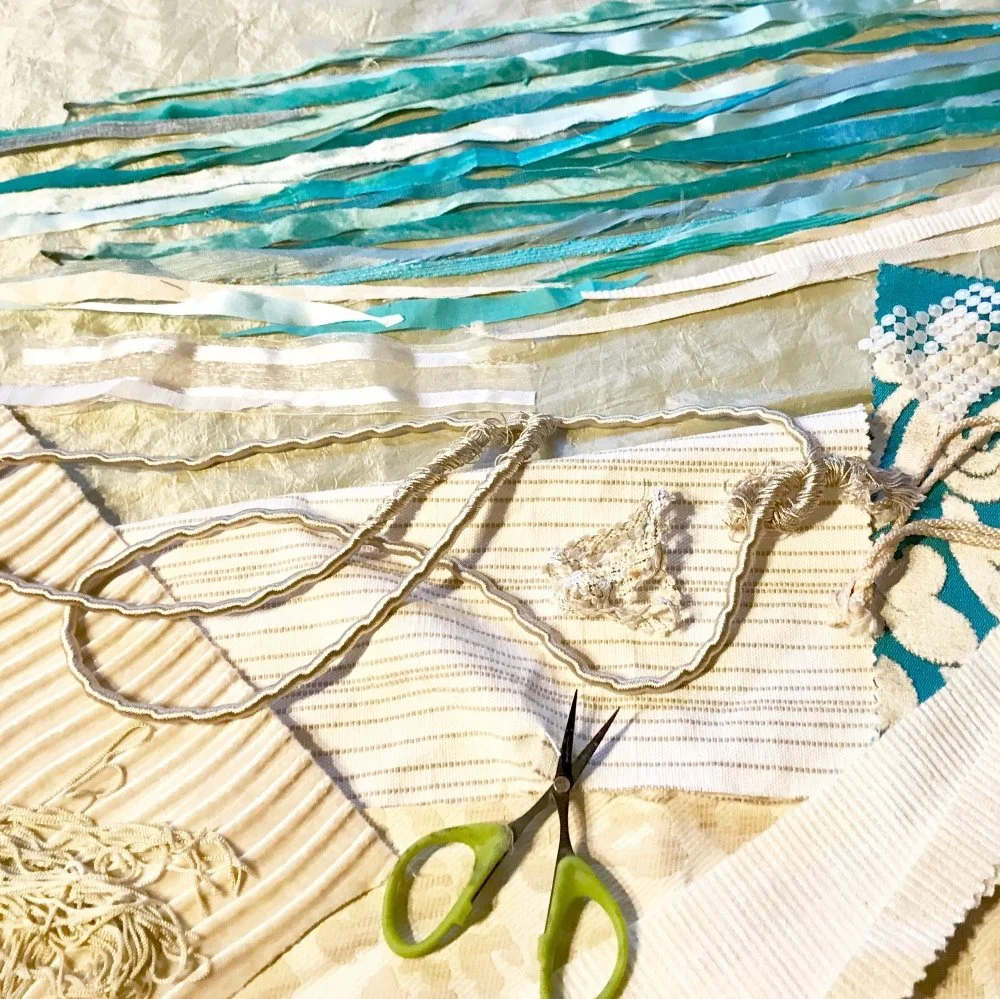
The term ‘textile art’ can cover a wide range of techniques, including embroidery, weaving, knitting, crochet, quilting, appliqué, tapestry, felting and textile printing. I use free motion embroidery and applique to create my pieces - using a specialist sewing machine, however I also often incorporate hand embroidery and embellishment. Textile artists are given another dimension through which to create shape, movement, detail and texture. The possibilities are endless - and that is what I love about it!
A brief history of textile art
People have been decorating and manipulating textiles for thousands of years.
Historically, techniques such as weaving, embroidery and quilting were often closely connected with everyday life. Fabrics were made into clothing, furnishings and ceremonial objects, while decorative stitching allowed makers to add colour, symbolism and individuality.
For a long time, textile work was often described as a craft rather than fine art. In more recent decades, however, textile and fibre art have become increasingly prominent within contemporary art, with artists using traditional techniques in experimental and highly expressive ways.
That combination of heritage and contemporary creativity is one of the things that makes textile art so interesting.
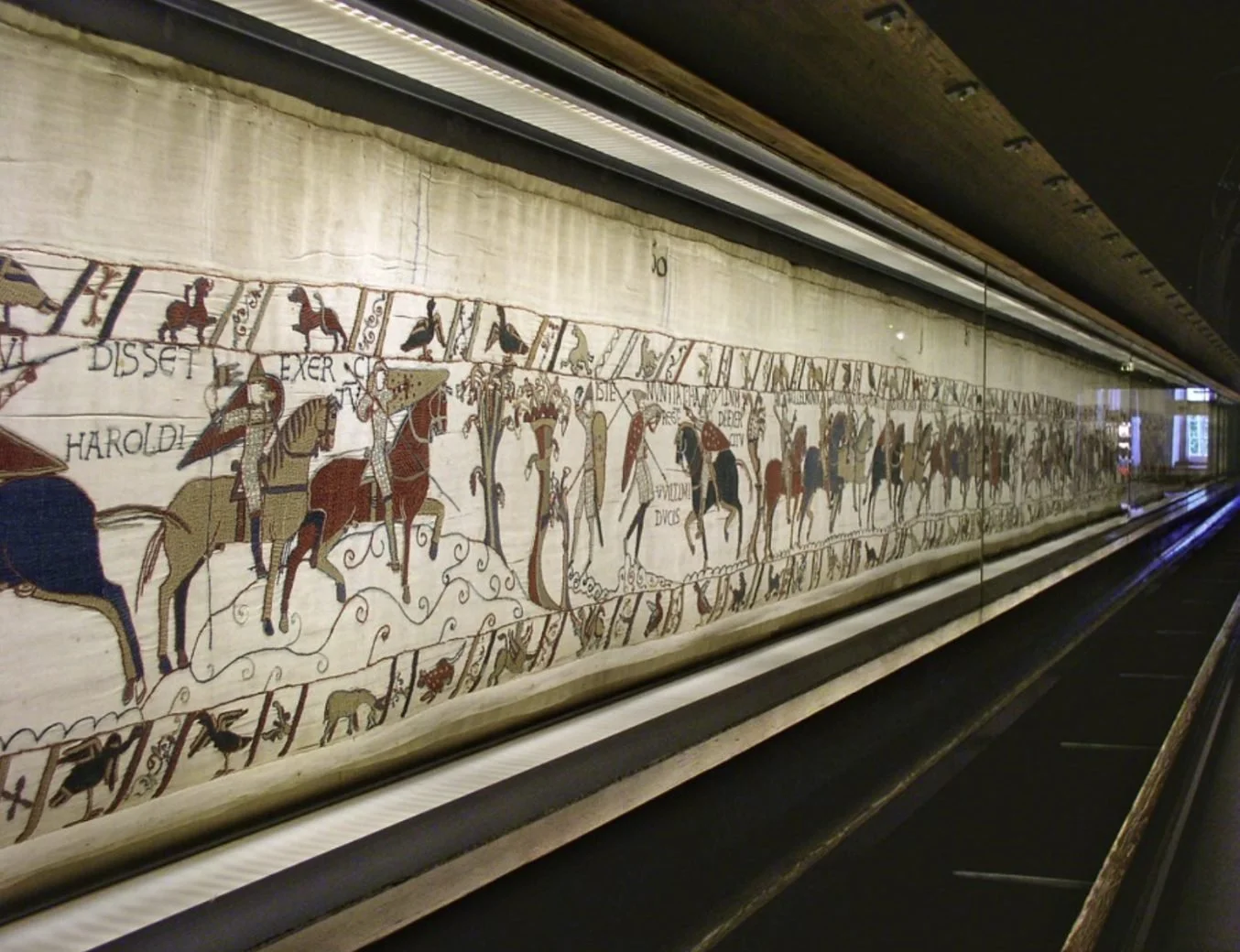
Few pieces of textile art are as iconic as the Bayeux Tapestry. Almost 1,000 years old, this remarkable embroidered work shows just how powerful fabric and stitch can be as a way of telling stories.
Textile art also has an inviting quality. Fabrics are familiar materials that we encounter every day, so textile pieces can bring warmth and softness into an interior in a way that more conventional artwork sometimes does not.
Is embroidery textile art?
Absolutely. Embroidery is one of the oldest and most recognisable forms of textile art, using stitch to create colour, texture, pattern and imagery. In my own work, free-motion embroidery allows me to almost “draw” with thread, building up the detail and movement that characterise my pieces
In Your Home.
Textile art can provide a softer alternative to conventional artwork. It’s not just for walls either! Decorative textiles can also be echoed throughout a room in cushions, curtains or smaller home accessories. Textile art provides colour, pattern, texture and (very important for me), narrative. Stories of places, themes, nature - can all be told in textile. Botanical textile pieces work particularly well in interiors because they introduce elements inspired by the natural world without requiring a space to feel overly themed. A detailed floral or woodland design, for example, can become a focal point while still sitting comfortably alongside neutral furnishings and natural materials.
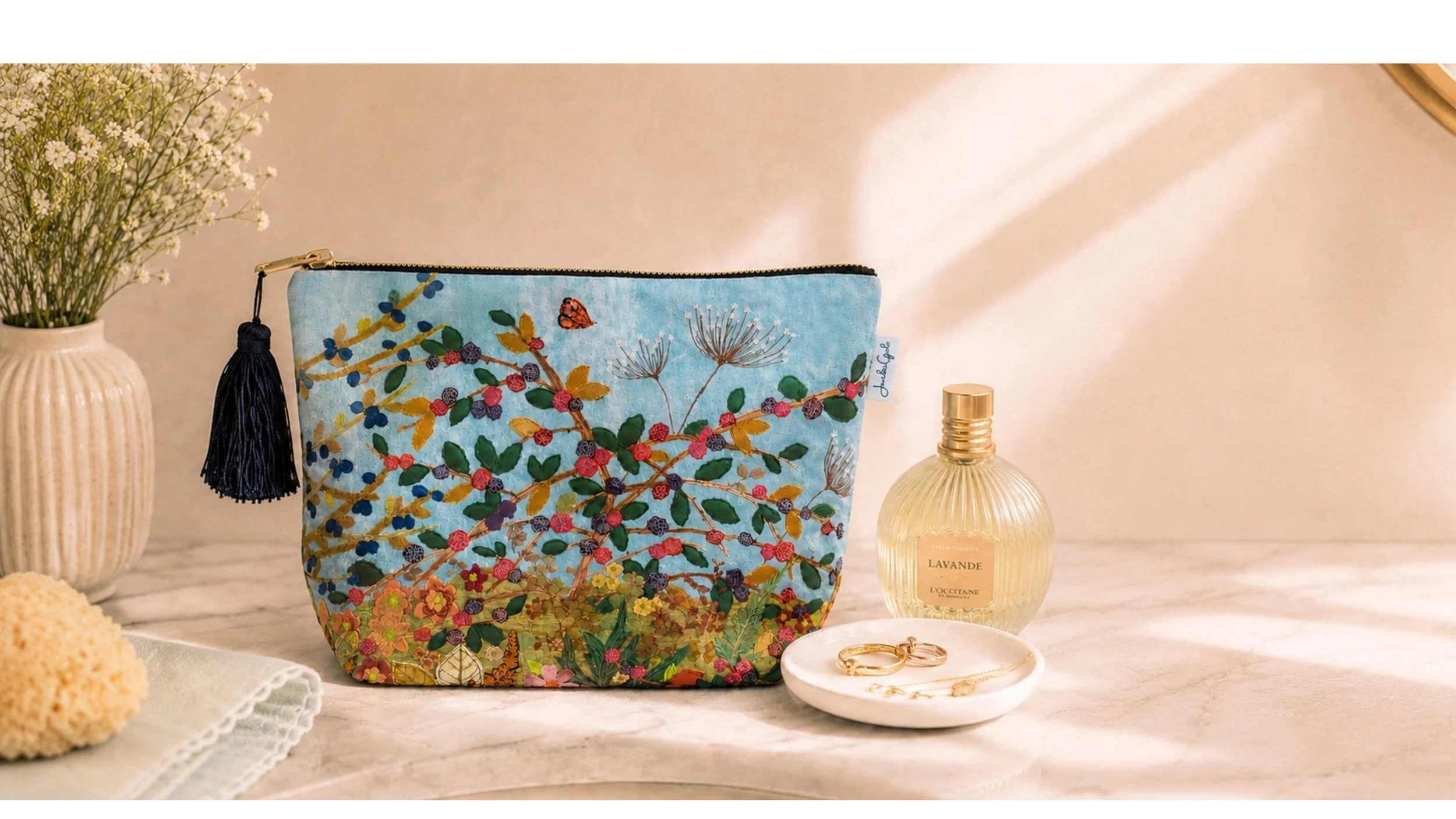
My velvet cosmetic bags are a perfect example of how textile art can be translated and appreciated in other forms.
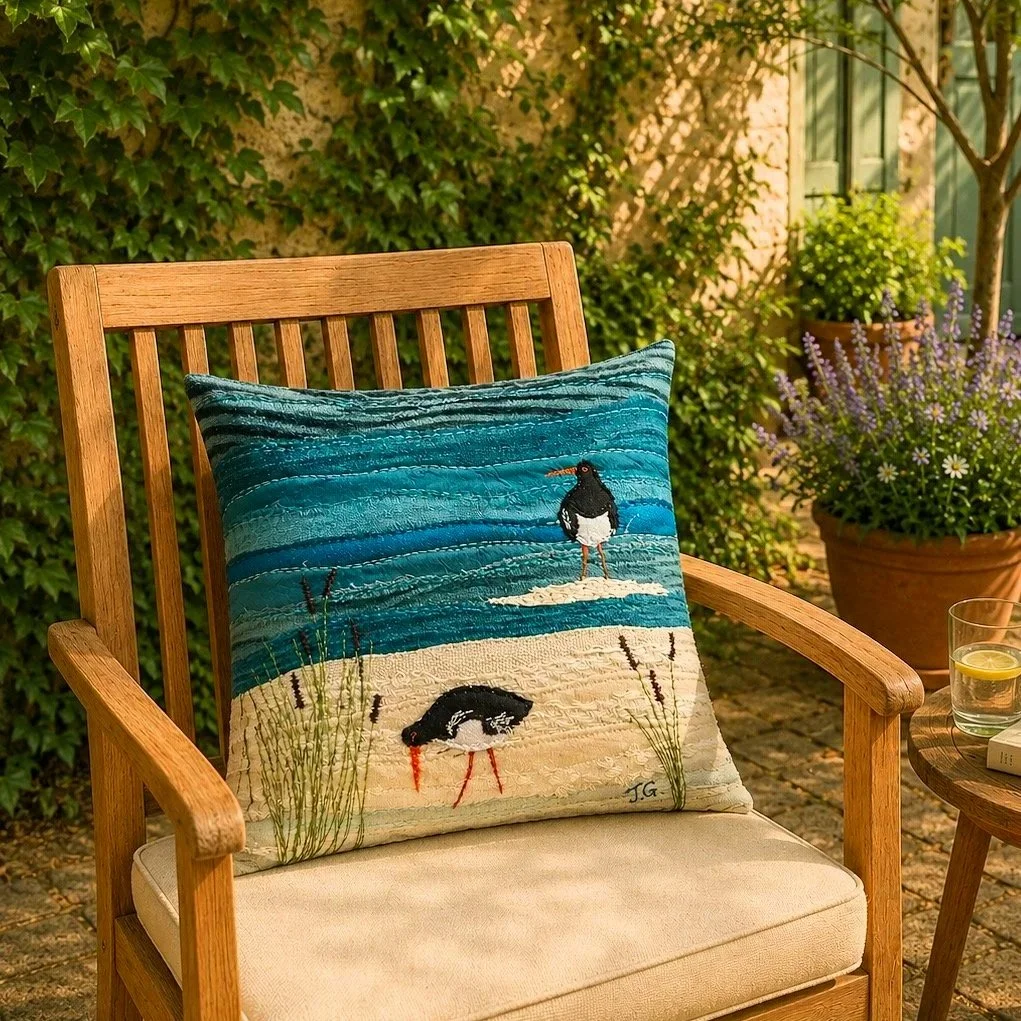
Cushions are a perfect way of introducing textile art into a home (or garden!)
Whether you are drawn to intricate embroidery, bold woven pieces or delicate botanical designs, textile art offers an enormous variety of styles to explore.
Look closely at a textile piece and you begin to notice the details: individual stitches, overlapping fabrics, changes in texture and tiny variations in colour. For me, it’s all about the detail. Those details are often what give textile artwork its distinctive warmth and character — and why it continues to inspire artists, designers and interiors today.
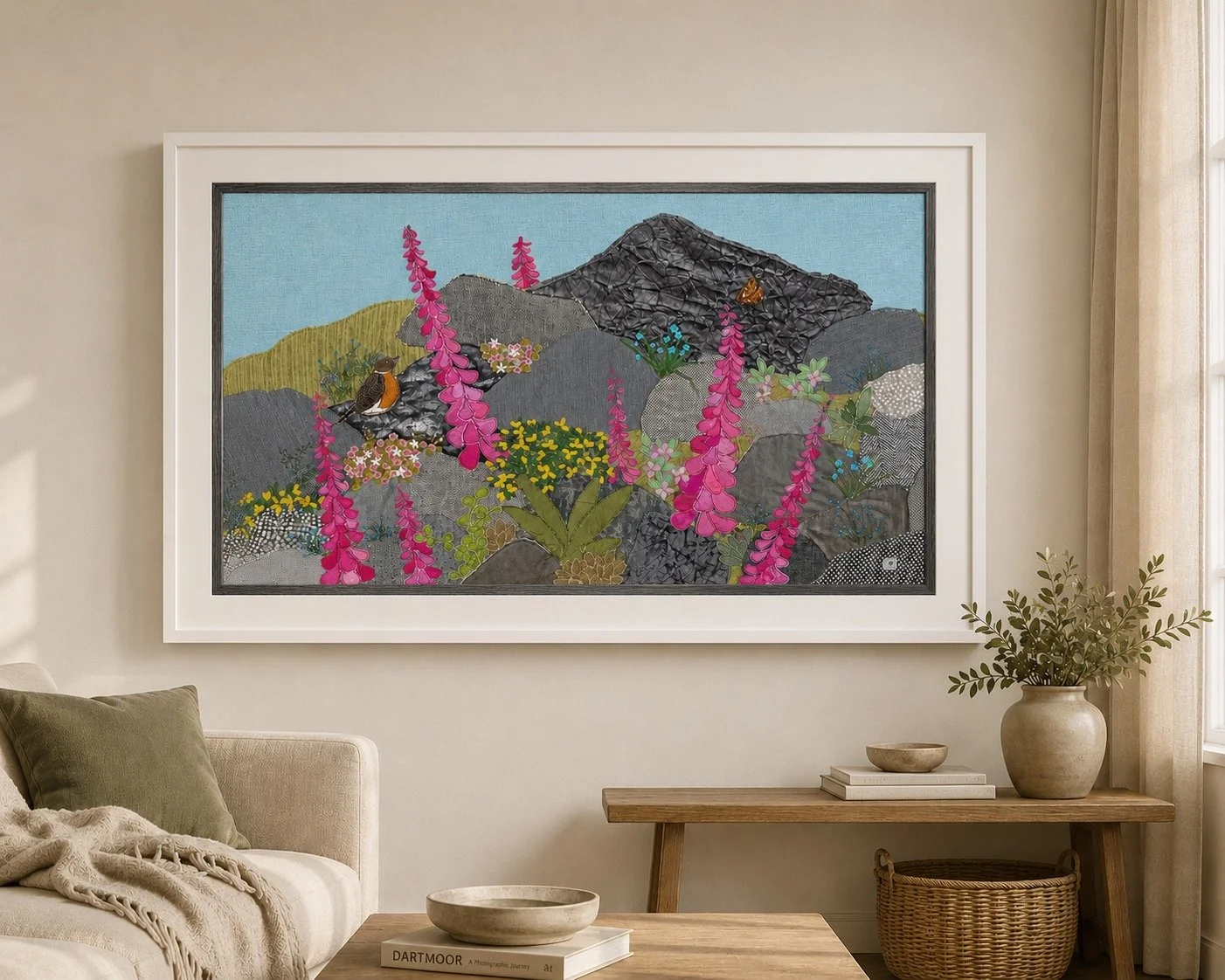
One of my latest pieces ‘Amongst The Rocks’ is inspired by the beautiful rugged landscape of Dartmoor National Park. A timeless interpretation of the magical intricacies nature offers us.
I’m very proud of my growing collection of nature-inspired art. My work has evolved over the years, exploring many different themes and styles, but nature is where I feel most firmly rooted. And, as any nature lover knows, inspiration is everywhere. Living and working in beautiful Devon gives me so much to draw from every single day - from the changing seasons and hedgerows to the colours, textures and tiny details that are so easy to overlook.
You can view my latest collection of original work here.
Remember, next time you see a piece of textile art, take a closer look.